Why bleaching works differently on virgin hair
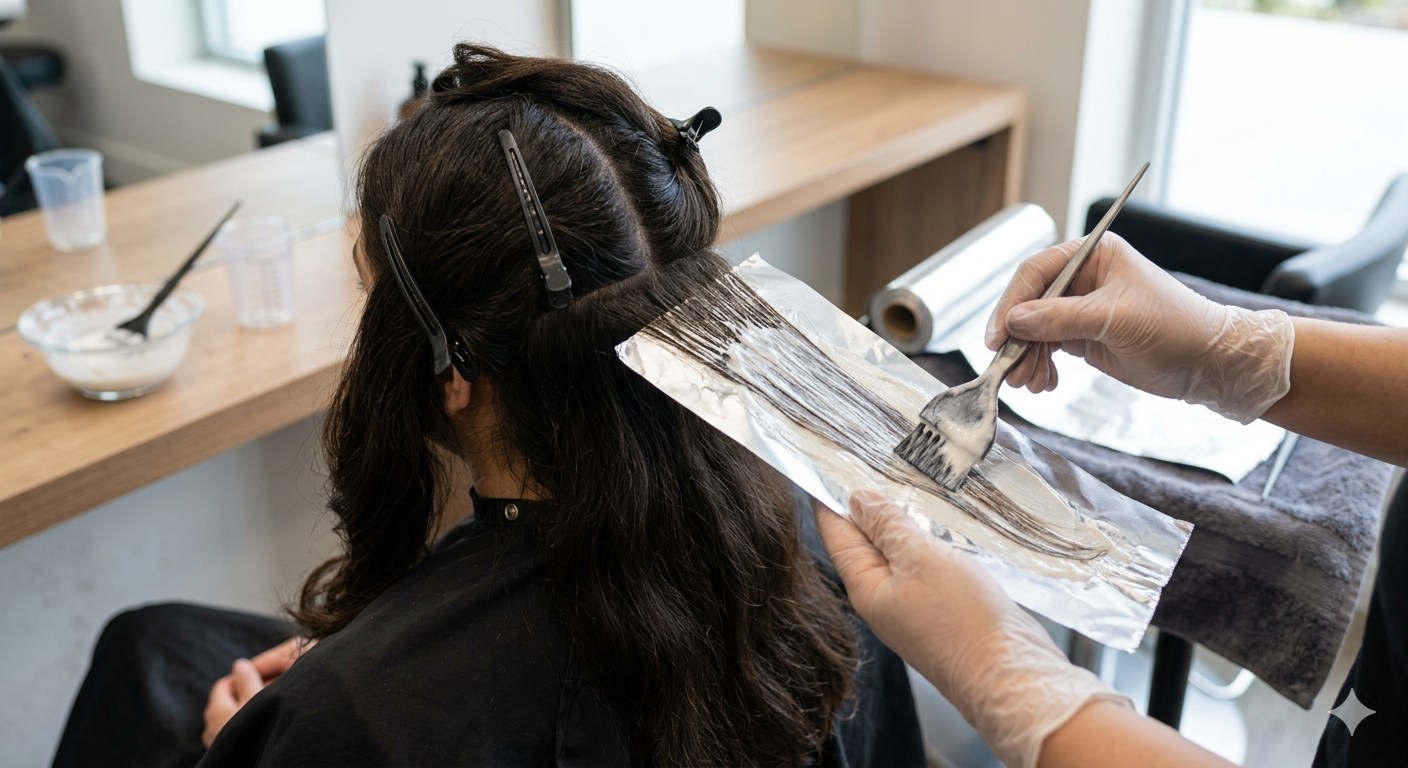
Bleaching is a chemical process that removes melanin, the natural pigment molecule, from the hair strand. The bleach mixture contains hydrogen peroxide, which acts as the developer, and persulfate salts in the powder, which work together to penetrate the cuticle, open the cortex and oxidize the pigment molecules inside the strand until they become colorless.
On virgin hair with an intact, aligned cuticle like Pink Lemon 13A bundles, this process happens more evenly and more predictably than on processed hair. The cuticle opens uniformly when exposed to developer, which means the bleach penetrates at a consistent rate across every strand. The result is more even lift, fewer hot spots and a more predictable final color.
On lower-grade or previously processed hair, the cuticle is already partially damaged or inconsistently aligned. Bleach penetrates at different rates in different areas, causing uneven lift that produces a patchy or streaked result. This is one of the clearest practical advantages of starting with high-grade virgin hair when you plan to color.
The U.S. Food and Drug Administration classifies hair bleach as a cosmetic product and provides safety guidance on its use, including warnings about allergic reactions and scalp sensitization that apply to human hair extensions as well as natural hair.
Important before you start: This guide covers bleaching bundles off the weft before installation, which is the safest approach. Bleaching hair while installed on your head means bleach is in proximity to your scalp, which significantly increases the risk of chemical burns and scalp irritation. Whenever possible, bleach your bundles before installing.
Developer volume guide for virgin hair bundles
Choose the right developer strength before you start. Higher is not always better.
The strand test: the step most people skip and should not
A strand test is a small test bleach session done on a section of the hair 24 to 48 hours before the full bleach application. It tells you three things you cannot find out any other way: how the hair responds to the developer strength you are using, how long the processing takes to reach your target shade, and whether the hair is strong enough to handle the full session without breakage.
Skipping the strand test is the most common reason bleaching goes wrong. Even on high-grade virgin hair, different lots, different lengths and different storage conditions can affect how the hair lifts. A strand test takes 30 minutes and protects a session that may take several hours and cost a significant amount of money.
The strand test is not optional. It is the only way to know in advance what your hair will do. Every extra hour you spend on preparation saves you from trying to fix a bleach disaster that may not be fixable.
Pink Lemon HairTo do a strand test, cut a small section from the inside of a weft where it will not be visible in the finished install. Mix your bleach and developer in the same ratio you plan to use for the full session. Apply to the strand, cover with foil and check every 5 minutes. Note the time it takes to reach your target shade. Use that timing as your maximum for the full session and stop early if the hair reaches the shade before the time is up.
🌈 Hair color lift spectrum
Select a developer volume to see which color range you can expect to reach from natural black hair.
Step-by-step bleaching process for virgin hair bundles
This process assumes you are bleaching bundles off the weft before installation. This gives you the most control over the process and eliminates the risk of scalp exposure.
Do your strand test 24 to 48 hours before
Cut a small section from the inside of a weft. Mix bleach and developer, apply to the strand and time the lift. Note the shade and time. This is your reference for the full session.
Wash the bundles without conditioner
Wash with shampoo only. No conditioner. Conditioner coats the strand and creates a barrier that prevents even bleach penetration. Allow the hair to air dry completely before applying bleach. Applying bleach to damp hair dilutes the mixture and produces uneven results.
Gather all supplies before you start
You will need: bleach powder, 20 volume developer, a non-metallic mixing bowl and brush, gloves, foil sheets, a timer, a clip or hair tie, your deep conditioner ready to go and old towels. Do not start without everything within reach. Once bleach is mixed you have limited working time.
Mix your bleach immediately before use
Mix 1 part bleach powder to 2 parts 20 volume developer in a non-metallic bowl. Mix to a smooth, spreadable consistency similar to thick yogurt. Never mix in a metal container as bleach reacts with metal and can cause uneven lift or damage. Use the mixture within 30 minutes of mixing.
Apply to the bundles off the weft
Lay a bundle flat on a foil sheet. Working from root to tip, apply bleach evenly using a brush. Saturate thoroughly but do not over-apply. Fold the foil over the bundle, seal the edges and set your timer based on the strand test result. Never exceed 45 minutes total processing time.
Check every 10 minutes without fail
Open the foil and check the hair every 10 minutes. You are looking for your target shade. Remove bleach the moment the hair reaches the shade you want, even if the timer has not finished. Leaving bleach on after the target shade is reached continues to lift and damage the strand without improving the color result.
Rinse thoroughly with cool water
Remove all bleach residue with cool water. Never use hot water during bleach rinsing as it keeps the cuticle open and causes additional damage during the rinse process. Run cool water through the hair until the water runs completely clear. Any bleach residue left in the hair will continue oxidizing and cause ongoing damage.
Deep condition immediately, no exceptions
Apply a deep conditioner or protein treatment immediately after rinsing. Do not skip or delay this step. Cover with a plastic cap and leave for 20 to 30 minutes. The conditioning treatment begins rebuilding moisture in the cuticle immediately, which determines how soft and manageable the hair is going forward. This single step makes the biggest difference in the final quality of bleached hair.
When to go to a professional instead of doing it yourself
Some color targets are achievable at home. Others are not, and attempting them without professional knowledge and tools leads to breakage, damage or a color result that is much harder to fix than it was to cause.
Always go to a professional for: Platinum blonde or 613 from black hair in one session. Any bleach session using 30 volume or higher. Corrective color after a previous bleach that went wrong. Bleaching extensions that are already installed on your head. Color correction after a toner that turned the hair green or grey.
| Goal | Starting shade | Home safe? | Sessions needed |
|---|---|---|---|
| Dark brown to light brown | Natural black | Yes, 20 vol | 1 session |
| Light brown to dark blonde | Dark brown | Yes, 20 vol | 1 session |
| Dark blonde to medium blonde | Light brown | Yes, 20 vol | 1 to 2 sessions |
| Medium blonde to light blonde | Dark blonde | Pro recommended | 2 sessions |
| Black to platinum (613) | Natural black | Professional only | 3 to 4+ sessions |
| Any color correction | Any | Professional only | Varies |
| Bleach on installed hair | Any | Not recommended | Not recommended |
The science of bleach damage and how to minimize it
Understanding what bleach actually does to the hair strand helps you make better decisions during and after the process.
Bleach works by oxidizing the melanin pigment molecules inside the cortex of the hair strand. To reach the cortex, the developer must first open the cuticle scales. While the cuticle is open, moisture inside the strand can escape and the structural proteins in the cortex are exposed and vulnerable to damage from the oxidizing agents.
Research published in the National Institutes of Health database on hair fiber morphology has documented that bleaching causes measurable reduction in disulfide bond density in the cortex and progressive cuticle surface erosion with repeated sessions. The research confirms that lower developer volumes and shorter processing times produce less structural damage than higher volumes and longer sessions, which is why 20 volume with a strand-tested timing is the safest approach for most home bleaching.
The National Cancer Institute also maintains public guidance on hair dye ingredients and safety research that is relevant for anyone doing regular color work, whether on extension hair or their own natural hair.
Minimize damage with these four habits: Never bleach the same hair within two weeks. Use 20 volume unless a professional recommends otherwise. Always deep condition immediately after rinsing. Reduce heat styling frequency in the two to four weeks following a bleach session to give the cuticle time to recover.
Post-bleach care: the routine that saves your bundles
The care routine you follow in the weeks after bleaching is what separates bundles that stay beautiful from bundles that become dry, brittle and unmanageable. Bleached hair has a more open cuticle and requires more consistent moisture management than unbleached virgin hair.
Deep condition weekly
For the first four weeks after bleaching, deep condition every seven days. Bleached hair loses moisture faster than virgin hair and needs consistent replenishment to stay soft.
Switch to sulfate-free shampoo
Sulfate shampoos strip color and moisture from bleached hair faster than from virgin hair. Switch to a color-safe sulfate-free formula immediately after bleaching.
Reduce heat to twice a week
Heat styling on recently bleached hair accelerates cuticle damage. Limit heat tools to twice a week maximum for the first month and always apply heat protectant.
Silk scarf every night
Friction from cotton pillowcases causes more damage to bleached hair than to virgin hair because the cuticle is more open. A silk scarf is essential, not optional, after bleaching.
Seal the wefts
Bleaching can loosen weft construction and increase shedding. Apply a weft sealant along the top of each weft immediately after the bleach session to prevent shedding at the edges.
Wait 4 weeks between sessions
If you need multiple bleach sessions to reach your target shade, wait at least four weeks between sessions to give the hair time to recover moisture and rebuild some cuticle integrity.
Frequently asked questions
Can you bleach virgin hair at home?
What developer volume should I use to bleach virgin hair bundles?
How many shades can you lift virgin hair in one session?
Does bleaching damage virgin hair bundles?
How long should I leave bleach on virgin hair?
Can I bleach virgin hair that is already installed?
How do I get to 613 blonde from black hair?
Continue reading
Shop 13A virgin bundles that are bleach and dye ready
Pink Lemon 13A virgin hair is 100% unprocessed and takes color beautifully. Shop straight, body wave and deep wave now.
Shop bleach-ready bundles ↗